Best Beach Music Festivals in the World
Beach festivals solve a problem that field festivals cannot: what to do between sets. When the ocean is fifty meters from the stage, the downtime becomes the experience. These eight festivals put water — ocean, lake, or coastline — at the center of the design, not as a backdrop but as a feature.
Tortuga Music Festival
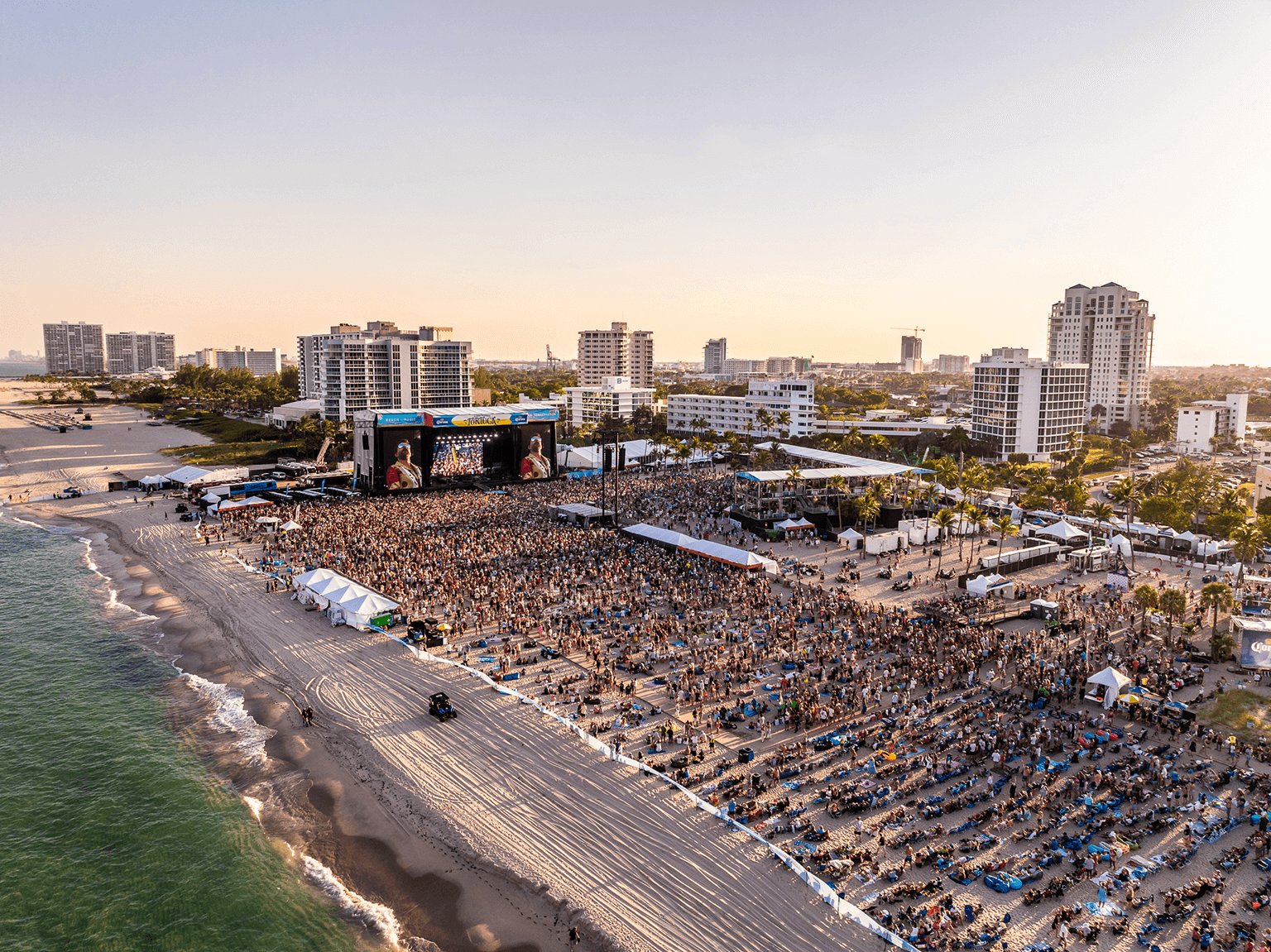
Fort Lauderdale Beach hosts Tortuga every April, drawing around 30,000 across three days. The stages sit directly on the sand with the Atlantic Ocean behind them. The lineup programs country, rock, and Americana — a genre mix that fits the beachfront setting better than most. Between sets, attendees swim, paddleboard, and spread towels on the beach like a normal Saturday, except with a festival-grade sound system in the background. Tortuga partners with ocean conservation organizations, and proceeds support marine research. No camping, no mud, no wellies — just sand.
Primavera Sound
Barcelona's Primavera Sound occupies the Parc del Fòrum, a brutalist waterfront complex where stages face the Mediterranean. Around 60,000 attend daily since 2001, with a lineup that spans indie, electronic, hip-hop, and experimental music. The waterfront setting means you can see the sea from most of the main stages, and the concrete terraces along the shore become gathering spots between sets. Primavera starts late — first acts at 4 PM, headliners after midnight — syncing with Barcelona's natural rhythm and the long Mediterranean summer evenings.

Sónar
Barcelona's second entry earns its place because Sónar by Day occupies the Fira Montjuïc with views across the city to the sea, and the overall festival rhythm is shaped by the Mediterranean coast. Sónar has run since 1994, drawing around 60,000 across three days, with electronic music, visual art, and technology programming split between daytime experimental sessions and late-night headline DJ sets at the Fira Gran Via.

Boom Festival
Every two years, around 40,000 people gather at Idanha-a-Nova lake in central Portugal for Boom Festival. The lakeside setting is central to the experience — the lake provides swimming, cooling, and a visual anchor for the entire site. Boom has run biennially since 1997 and takes sustainability seriously, operating off-grid with solar power and constructed wetlands. The music spans psychedelic trance, ambient, and experimental electronic across stages integrated into the shoreline landscape. The remote lakeside location creates a pilgrimage atmosphere that annual festivals rarely achieve.
Outside Lands
San Francisco's Outside Lands takes place in Golden Gate Park, which sits between the Pacific Ocean and the city. While the festival itself is in the park rather than on the beach, Ocean Beach is a ten-minute walk from the western edge, and the Pacific fog rolling through the eucalyptus trees during evening sets creates a coastal atmosphere unique to this festival. Around 75,000 attend daily since 2008. The Wine Lands and Beer Lands programs showcase Northern California's coastal wine and craft beer culture.

Fuji Rock Festival
Japan's Fuji Rock occupies the Naeba ski resort in Niigata Prefecture, where mountain rivers run through the festival grounds. While not a beach festival in the traditional sense, water is everywhere — stages are built near waterfalls, boardwalks cross streams, and the mountain river gorge between stages is one of the most photographed natural features at any festival. Around 40,000 attend across three days since 1997. The Japanese attention to site integration means the water features feel designed rather than incidental.

Ruisrock
Finland's Ruisrock occupies the island of Ruissalo in Turku, surrounded by the Baltic Sea. Running since 1970, it is one of the oldest rock festivals in Europe. Around 35,000 attend across three days in early July, with the island's pine forests and rocky shoreline providing a natural coastal setting. The Baltic is swimmable in July (barely — Finnish tolerance for cold water helps), and the island geography creates a contained atmosphere that mainland festivals lack. Finnish midsummer light stretches past 11 PM.

Outlook Festival
Outlook relocated from Croatia's Fort Punta Christo to new Mediterranean venues, maintaining its identity as the leading sound system culture festival in Europe. The lineup centres on bass music, dub, drum & bass, grime, and dubstep, played through purpose-built sound systems in coastal settings. The combination of Mediterranean climate, seaside venues, and music that was born in London's dancehalls gives it a specific charge — sound system culture transplanted to the beach.
Which beach festival has the best swimming?+
Tortuga in Fort Lauderdale offers the easiest ocean access — the stages are literally on the beach. Boom Festival's Portuguese lake provides warm freshwater swimming. Ruisrock's Baltic Sea is accessible but cold.
Are beach festivals more expensive than regular festivals?+
Not necessarily. Tortuga and Primavera Sound price comparably to other festivals of similar size. Beach festivals often save on camping costs since most are day-festival format in cities with hotel options. The main added cost is sunscreen.
What should I wear to a beach music festival?+
Swimwear with a coverup for between stages, reef-safe sunscreen, a hat, sunglasses with a strap, and sandals that can handle sand and standing. Bring a light layer for evening — coastal temperatures drop after sunset. Leave valuables at your hotel.